GENESITE Environmental Protection Technology Co., Ltd.

The Evolution of Controllers: Enhancing Efficiency in Modern Applications
Jan 10,2026
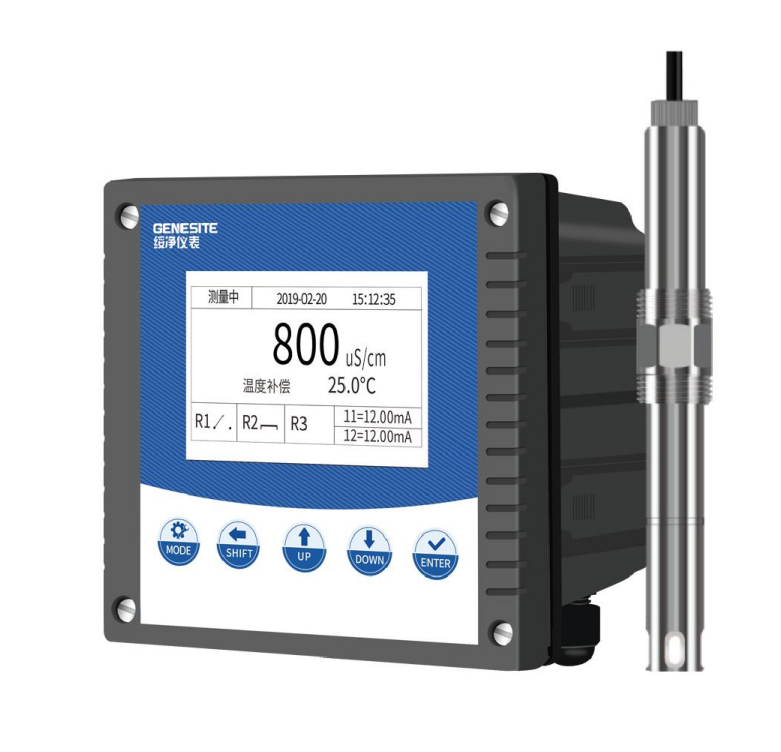
The Evolution of Controllers: Enhancing Efficiency in Modern Applications
Table of Contents
- Introduction to Controllers and Their Significance
- Historical Background of Controllers
- Types of Controllers in Modern Applications
- The Role of Sensors in Enhancing Controller Efficiency
- Recent Advancements in Controller Technology
- Future Trends in Controllers and Sensors
- Real-World Applications: Case Studies
- Conclusion
- Frequently Asked Questions
Introduction to Controllers and Their Significance
Controllers form the backbone of numerous electronic applications, serving critical roles in automation and process control across diverse industries. Their ability to regulate, manage, and optimize systems ensures smooth operation while maximizing efficiency. In an era marked by rapid technological advancements, understanding the evolution of controllers is essential for grasping how they enhance modern applications.
Historical Background of Controllers
The journey of controllers can be traced back to the early 20th century, where mechanical devices laid the foundation for automated control systems. Initial controllers were rudimentary, relying on gears, levers, and simple electrical circuits. As technology progressed, the introduction of electronic components revolutionized controller design.
By the mid-20th century, the advent of analog controllers allowed for smoother operation and finer adjustments. This paved the way for digital controllers in the 1970s, which utilized microprocessors for enhanced precision and functionality. The continuous refinement of these technologies has given rise to sophisticated programmable logic controllers (PLCs), which integrate complex algorithms and user-friendly interfaces.
Types of Controllers in Modern Applications
In contemporary applications, controllers can be categorized into several types, each tailored to specific functions and industries. Their unique characteristics make them suitable for a range of tasks.
Analog Controllers
Analog controllers manipulate continuous signals to achieve desired outputs. They are commonly used in applications requiring gradual adjustments, such as temperature regulation in HVAC systems. Despite their simplicity, they remain relevant due to their reliability and ease of use.
Digital Controllers
Digital controllers have transformed automation by leveraging discrete signals. Their ability to process data rapidly allows for complex control strategies, making them ideal for applications such as robotics and advanced manufacturing processes. These controllers often employ feedback loops to ensure optimal performance.
Programmable Logic Controllers (PLCs)
PLCs represent a significant advancement in controller technology, allowing for programmable configurations tailored to specific tasks. Widely used in industrial automation, PLCs can manage multiple inputs and outputs simultaneously, providing flexibility and scalability. Their user-friendly programming interfaces make them accessible to engineers and technicians alike.
The Role of Sensors in Enhancing Controller Efficiency
The integration of sensors with controllers is pivotal in enhancing system efficiency. Sensors provide real-time data, allowing controllers to make informed decisions that optimize performance. This synergy leads to improved accuracy, reduced waste, and enhanced responsiveness.
Different Types of Sensors
Various sensors are utilized in conjunction with controllers, each serving unique functions. Common types include:
- **Temperature Sensors:** Monitor and regulate temperature in applications from HVAC to manufacturing processes.
- **Pressure Sensors:** Measure pressure levels in fluid systems, ensuring safe and efficient operation.
- **Proximity Sensors:** Detect the presence or absence of objects, crucial in automation and robotics.
- **Flow Sensors:** Monitor the flow rate of liquids and gases, invaluable for process control.
Integrating Sensors with Controllers
Integrating sensors with controllers involves designing systems where data flows seamlessly. This integration enhances decision-making, allowing controllers to adjust parameters based on real-time feedback. For instance, in an automated assembly line, sensors can detect product alignment, enabling controllers to adjust machinery accordingly.
Recent Advancements in Controller Technology
The last decade has witnessed significant advancements in controller technology, driven by the rise of the Internet of Things (IoT) and artificial intelligence (AI). These innovations have redefined how controllers operate, leading to increased efficiency and functionality.
- **Smart Controllers:** Equipped with AI algorithms, smart controllers can analyze data patterns and make predictive adjustments. This capability minimizes downtime and enhances productivity.
- **Wireless Connectivity:** The integration of wireless technology allows controllers to communicate instantly with sensors and other devices, facilitating real-time monitoring and control.
- **Edge Computing:** By processing data closer to the source, edge computing reduces latency and enhances the responsiveness of control systems.
Future Trends in Controllers and Sensors
As technology continues to evolve, the future of controllers and sensors promises exciting developments. Anticipated trends include:
- **Increased Automation:** With the rise of smart factories, controllers will play a pivotal role in automating processes, leading to higher efficiency and lower operational costs.
- **Enhanced Interoperability:** Future controllers will prioritize interoperability, allowing seamless communication between diverse devices and systems, regardless of manufacturer.
- **Sustainability Focus:** As industries shift towards sustainability, controllers will be designed to optimize energy usage and reduce waste, aligning with global environmental goals.
Real-World Applications: Case Studies
To fully appreciate the impact of controllers in modern applications, it is essential to examine real-world case studies. These examples highlight the practical benefits and advancements that controllers and sensors bring to various industries.
Case Study 1: Automotive Manufacturing
In automotive manufacturing, the implementation of PLCs has streamlined assembly lines. Sensors integrated into robotic arms ensure precise placement of components, reducing errors and enhancing production speed. This automated system has resulted in a significant increase in output while maintaining high-quality standards.
Case Study 2: HVAC Systems
In HVAC applications, smart controllers equipped with temperature sensors optimize energy consumption. By adjusting airflow and temperature settings based on real-time occupancy data, these controllers enhance comfort while reducing energy costs. This approach not only benefits consumers but also contributes to environmental sustainability.
Case Study 3: Water Treatment Facilities
Water treatment facilities utilize pressure and flow sensors in conjunction with digital controllers to monitor and adjust chemical dosing. This integration ensures that water quality remains within regulatory standards while optimizing chemical use, leading to cost savings and improved environmental compliance.
Conclusion
The evolution of controllers has significantly influenced efficiency in modern applications, especially in the realm of electronic components and sensors. From analog devices to sophisticated PLCs, advancements in controller technology continue to shape industries and drive innovation. As we move towards a future characterized by smart technologies and increased automation, the role of controllers will undoubtedly expand, enhancing operational efficiency and promoting sustainability.
Frequently Asked Questions
1. What are the primary functions of controllers in automation?
Controllers manage and regulate processes by receiving data from sensors and making real-time adjustments to maintain desired outcomes.
2. How do sensors enhance the performance of controllers?
Sensors provide real-time data that allows controllers to make informed decisions, optimizing performance and improving efficiency.
3. What types of industries commonly use controllers?
Controllers are utilized across various industries, including manufacturing, automotive, HVAC, and water treatment facilities.
4. What is the difference between analog and digital controllers?
Analog controllers manipulate continuous signals, while digital controllers use discrete signals, allowing for more complex control strategies.
5. How are future trends influencing controller technology?
Future trends emphasize increased automation, enhanced interoperability, and a focus on sustainability, shaping the development and application of controller technologies.
TAG:

Contact Us
E-mail :
andrew@genesit1.com
Phone:
+8615896508337
Address:
Chanhe Industrial Park,LuoYang City, Henan Province,China


SAF Coolest v1.3.1.2 设置面板 GAGSD-AGYF-JZZQE-ZAV
违禁词: 第一,最,一流,领先,独一无二,王者,龙头,领导者,极致,
无数据提示
Sorry,当前栏目正在更新中,敬请期待!
您可以查看其他栏目或返回 首页