GENESITE Environmental Protection Technology Co., Ltd.


Residual Chlorine Sensor

| Customized support | OEM, ODM, OBM, Software reengineering |
| Place of Origin | Henan, China |
| Brand Name | GENESITE |
| Type | Residual Chlorine Sensor |
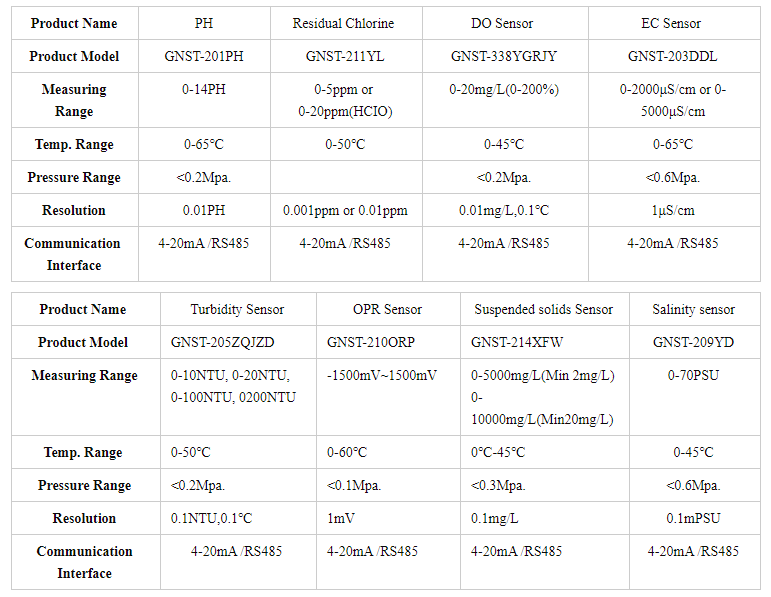
| Measuring range | 0-20.00mg/L(ppm) |
| Accuracy | 2%±10ppb HOCI |
| Temperature range | 0-60℃ |
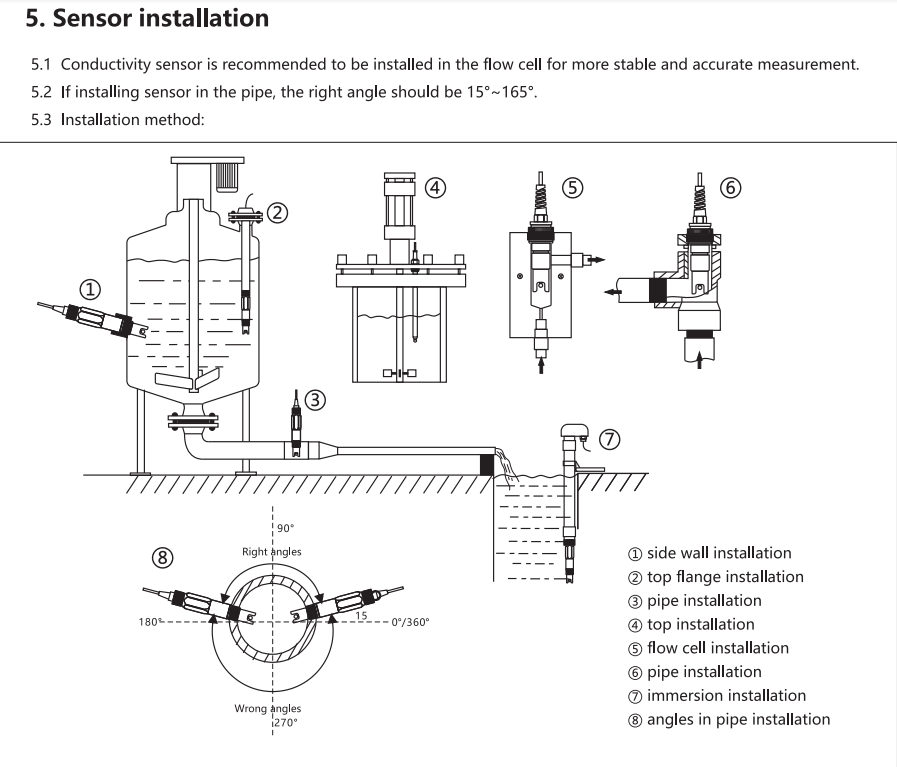
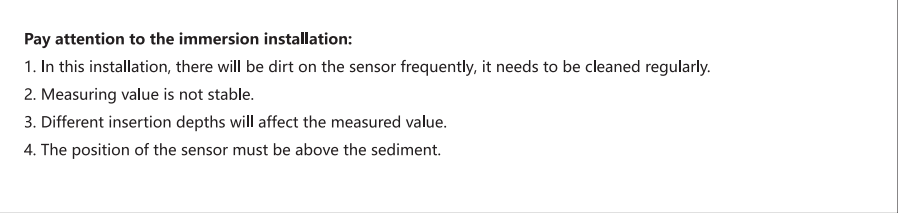
| Install Type | Immersion type /Flow through type |
| Protection grade | Ip68 |
| Modbus | RS485 |
| Cable length | 5m or customize |
| Power Supply | AC Powered 85-265VAC,50/60Hz/DC |
| powered | 24VDC±10% |
| Selling Units | Single item |
| Single package size | 35X25X12 cm |
| Single gross weight | 2.500 kg |
What is residual chlorine
The total amount of effective chlorine remaining in water after the reaction between water and added chlorine, measured in milligrams per liter. When treating drinking water, chlorine gas or certain chlorinated compounds (such as hypochlorite and chloramine compounds) are commonly used for disinfection. Sometimes chlorine gas is used to oxidize heavily polluted raw water to improve water quality. At this time, residual chlorine is often measured to control the treatment process. Excessive residual chlorine will bring a foul odor to the water supply, while insufficient residual chlorine will cause the water to lose its ability to maintain sterilization, reducing the hygiene and safety of the water supply

Residual chlorine in daily life
There are various forms of residual chlorine, mainly divided into two categories: free available chlorine (usually hypochlorous acid and hypochlorite ions), and chemical available chlorine (various chloroamines and derivatives). When using the breakpoint chlorination method (see disinfection) to improve the water quality of heavily polluted raw water, it is often necessary to distinguish between these two types of residual chlorine. When adding chlorine to this type of raw water, as the amount of chlorine added increases, the amount of residual chlorine also increases. However, when the amount of chlorine added exceeds a certain value, the amount of residual chlorine actually decreases with the increase of chlorine added. When the chlorine addition continues to increase and exceeds a certain value, the residual chlorine begins to gradually increase again, and the increase in residual chlorine is equal to the increase in chlorine, indicating that the oxidation of chlorine has been completed
Keywords:
Residual Chlorine Sensor
Residual Chlorine Sensor
Contact Us
Classification
Related Products

SAF Coolest v1.3.1.2 设置面板 GAGSD-AGYF-JZZQE-ZAV
无数据提示
Sorry,当前栏目正在更新中,敬请期待!
您可以查看其他栏目或返回 首页